<?xml version="1.0" encoding="UTF-8"?>
<rss version="2.0"
	xmlns:content="http://purl.org/rss/1.0/modules/content/"
	xmlns:wfw="http://wellformedweb.org/CommentAPI/"
	xmlns:dc="http://purl.org/dc/elements/1.1/"
	xmlns:atom="http://www.w3.org/2005/Atom"
	xmlns:sy="http://purl.org/rss/1.0/modules/syndication/"
	xmlns:slash="http://purl.org/rss/1.0/modules/slash/"
	>

<channel>
	<title>Michael &#38; Susan Dell Foundation</title>
	<atom:link href="http://www.msdf.org/feed/" rel="self" type="application/rss+xml" />
	<link>http://www.msdf.org</link>
	<description>Transforming the lives of children living in urban poverty through better health and education.</description>
	<lastBuildDate>Wed, 22 May 2013 08:00:19 +0000</lastBuildDate>
	<language>en-US</language>
	<sy:updatePeriod>hourly</sy:updatePeriod>
	<sy:updateFrequency>1</sy:updateFrequency>
	
		<item>
		<title>First person: Waahida Tolbert-Mbatha’s dream &#8211; Impact schools to reshape South African education</title>
		<link>http://www.msdf.org/blog/2013/05/waahida-tolbert-mbathas-dream-impact-schools-to-reshape-south-african-education/?utm_source=rss&#038;utm_medium=rss&#038;utm_campaign=waahida-tolbert-mbathas-dream-impact-schools-to-reshape-south-african-education</link>
		<comments>http://www.msdf.org/blog/2013/05/waahida-tolbert-mbathas-dream-impact-schools-to-reshape-south-african-education/#comments</comments>
		<pubDate>Wed, 22 May 2013 08:00:19 +0000</pubDate>
		<dc:creator>Guest Blogger</dc:creator>
				<category><![CDATA[Education Reform]]></category>
		<category><![CDATA[Education]]></category>
		<category><![CDATA[South Africa]]></category>
		<category><![CDATA[South Africa Education]]></category>
		<category><![CDATA[South African Education]]></category>
		<category><![CDATA[Urban Education]]></category>

		<guid isPermaLink="false">http://www.msdf.org/?p=4617</guid>
		<description><![CDATA[What keeps me awake at night is excitement—the knowledge that I’m part of a dream that’s bigger than my own: To design new South African education models and build a vibrant network of high-impact schools that serve the nations’ most vulnerable as a matter of course. ]]></description>
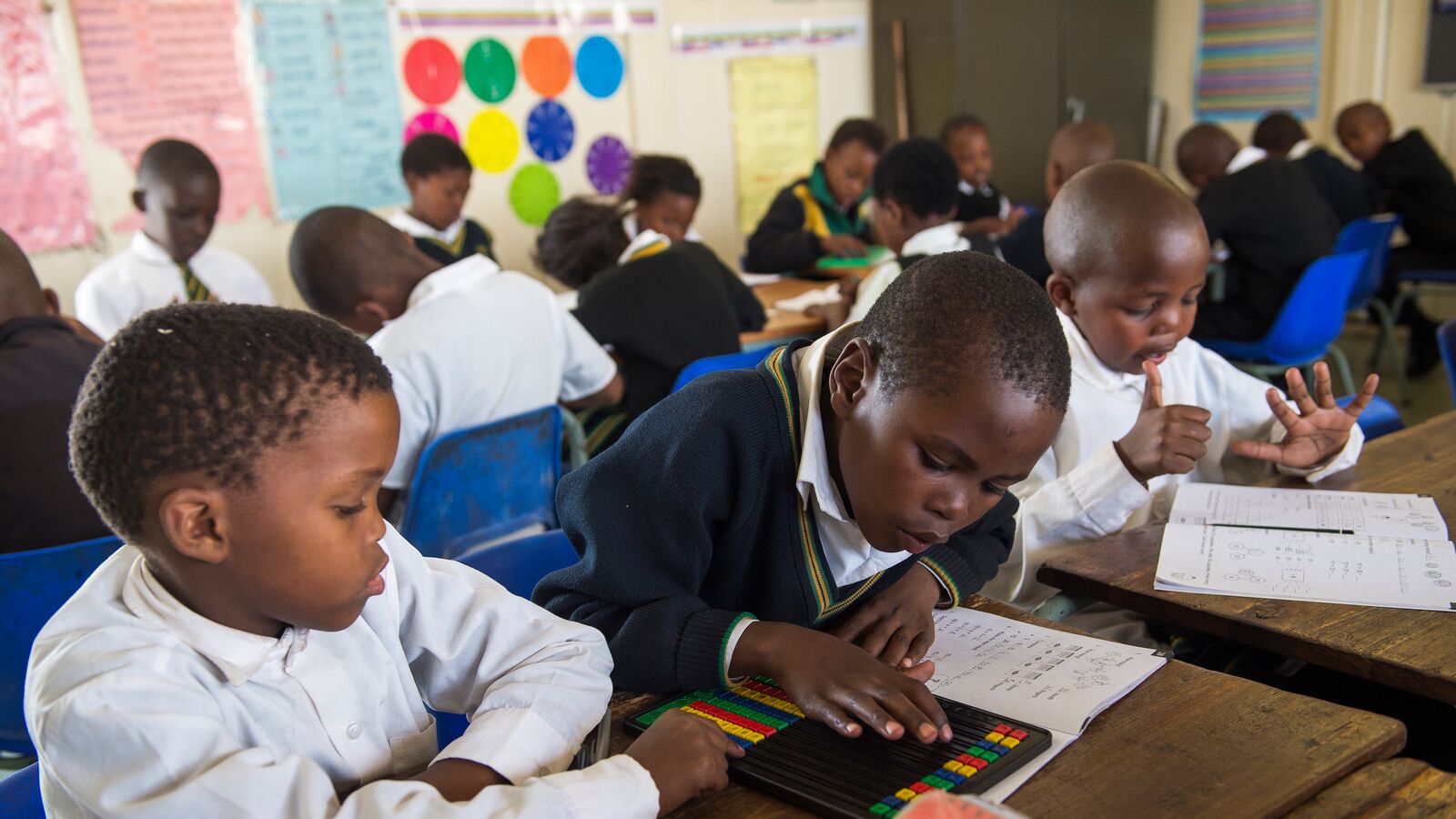
				<content:encoded><![CDATA[<p>In 2015, I will open Kgololo Academy, a grade school which will welcome 50 grade R students<a title="" href="#_ftn1">[1]</a> in its first year of operation. The school will serve Alexandra, a historic township in the center of Johannesburg.</p>
<p>Now over 100 years old, <a href="https://www.google.com/url?sa=t&amp;rct=j&amp;q=&amp;esrc=s&amp;source=web&amp;cd=1&amp;cad=rja&amp;ved=0CC4QFjAA&amp;url=http%3A%2F%2Fwww.rnw.nl%2Fafrica%2Fbulletin%2Fjoburgs-alexandra-township-symbol-inequity-turns-100&amp;ei=PHibUaTPJ4KXrgGiyIGwCQ&amp;usg=AFQjCNEDpKPtDZccvH0vVx7Af8VyQcf2YA&amp;sig2=fNr-hwU55nTu4cT0oq7TrQ&amp;bvm=bv.46751780,d.aWM" target="_blank">Alexandra</a> has a rich legacy. But it’s still haunted by the remnants of apartheid. Built to house 70,000 residents, Alexandra is now home, depending on who’s counting, to an estimate 350,000 to 700,000 residents, 70 per cent of whom are younger than 35. The township has 13 government run primary schools, and one private primary. There’s a rough ratio of 1200 students to each primary school. Today, <a href="https://www.google.com/url?sa=t&amp;rct=j&amp;q=&amp;esrc=s&amp;source=web&amp;cd=1&amp;cad=rja&amp;ved=0CC4QFjAA&amp;url=http%3A%2F%2Fwww.khululafoundation.org%2Fwp-content%2Fuploads%2F2013%2F04%2FFeasibility-Study-Presentation.pdf&amp;ei=xXibUfjbEMqcrQHCk4CwDg&amp;usg=AFQjCNH5eTbkILHSuYE8fyjiTFgdtY_IIQ&amp;sig2=nG1gjvWNe2bQA0JbQqQ-0Q&amp;bvm=bv.46751780,d.aWM" target="_blank">many parents send their children outside of the community</a> to get a better education.</p>
<h2>Transforming South African education: One school in Alexandra; a network of impact schools nationwide</h2>
<p>Kgololo’s vision is to provide learners with a transformative university preparatory education within the community. That base, we hope, will then prompt them to transform their lives and their communities. But <a href="http://www.khululafoundation.org/khulula-academy/" target="_blank">Kgololo Academy</a>, no matter how great it becomes, can’t serve all the children in Alexandra Township, let alone all the other underserved families and children across South Africa who want better schools.</p>
<p>The fact is that no individual or school can do this work on its own. Kgololo Academy will become a member of a broader network of <a href="http://www.msdf.org/programs/urban-education/initiatives/south-africa/impact-schools/" target="_blank">South African impact schools</a> that seek to prepare learners from economically disenfranchised communities for university. These schools charge low or no-fees, and promote an approach that supposes that all students are capable of learning.</p>
<p>As we develop this network, it’s critical that we become effective as soon as possible, which means <a href="http://www.msdf.org/blog/2012/12/impact-schools-government-action-global-lessons-for-south-african-education/" target="_blank">building on and learning from the lessons of others</a>. I’m lucky in that I have the opportunity to tap directly into the expertise of KIPP, a network of 125 charter schools in the United States that has a well-documented track record of closing the achievement gap in economically disenfranchised communities.</p>
<p>As a member of the <a href="http://synergies.teachforall.org/content/kipp-global-fellows-program#.UZt3jKLkt8E" target="_blank">KIPP Global Fellows Program</a>, I’ll be one of a handful of aspiring school principals and school leaders from South Africa, Mexico, Israel, and Chile who will take part in an extensive one year training program to learn how to lead high performing schools in their home countries. In the first six-months, we’ll focus on leadership theory and philosophy, and complete residencies at high-performing schools in the US. Then, in the last six months of the fellowship, we’ll work virtually with a coach. This coaching period will be critically important: We’ll learn by actually leading, making mistakes, and then doing it better the next time. We’ll have the opportunity to share, learn, and unlearn those things which do not serve their students.</p>
<h2>Serving the most vulnerable as a matter of course</h2>
<p>Last week, as I was preparing to embark on a six month journey that promises to be challenging and life altering, butterflies fluttered in my stomach and insomnia dogged me nightly. But it wasn’t fear that kept me awake; I have a strong base for this work. I was an educator for over seven years, three of them at a top performing charter school in Washington, DC. I have a keen sense of what good teaching looks like, and feel confident modeling best practices for educators at Kgololo Academy. I believe I can achieve my dream of creating a dynamic and academically rigorous learning institution that provides learners with the space to cultivate and live out their ambitions.</p>
<p>What keeps me awake at night is excitement and the knowledge that I’m part of a dream that’s bigger than my own: To design new South African education models and build a vibrant network of high-impact schools that <a href="http://www.msdf.org/blog/2012/05/education-in-south-africa-quality-schooling-shouldnt-be-about-luck/" target="_blank">serve the nations’ most vulnerable as a matter of course</a>. I’m ready to begin.</p>
<p><i>Waahida Tolbert-Mbatha believes that education is one of the keys to breaking the cycle of poverty.  In 2011, Waahida co-founded the <a href="http://www.khululafoundation.org/" target="_blank">Khulula Foundation</a>, which seeks to equip a cadre of change agents from economically disenfranchised communities with the tools to transform their lives and their communities.  Prior to establishing the Khulula Foundation, Waahida worked for seven years as a middle school humanities teacher and as an after school program coordinator in Washington, DC.</i></p>
<div>
<hr align="left" size="1" width="33%" />
<div>
<p><a title="" href="#_ftnref1">[1]</a> Grade R is the equivalent of kindergarten.</p>
</div>
</div>
]]></content:encoded>
			<wfw:commentRss>http://www.msdf.org/blog/2013/05/waahida-tolbert-mbathas-dream-impact-schools-to-reshape-south-african-education/feed/</wfw:commentRss>
		<slash:comments>0</slash:comments>
		</item>
		<item>
		<title>First person: One family’s “no fry zone”</title>
		<link>http://www.msdf.org/blog/2013/05/childhood-obesityfirst-person-one-familys-no-fry-zone/?utm_source=rss&#038;utm_medium=rss&#038;utm_campaign=childhood-obesityfirst-person-one-familys-no-fry-zone</link>
		<comments>http://www.msdf.org/blog/2013/05/childhood-obesityfirst-person-one-familys-no-fry-zone/#comments</comments>
		<pubDate>Thu, 16 May 2013 11:00:49 +0000</pubDate>
		<dc:creator>Guest Blogger</dc:creator>
				<category><![CDATA[Obesity Awareness]]></category>
		<category><![CDATA[Be Well stories]]></category>
		<category><![CDATA[Childhood Health]]></category>
		<category><![CDATA[Childhood Obesity]]></category>
		<category><![CDATA[Obesity Prevention]]></category>

		<guid isPermaLink="false">http://www.msdf.org/?p=4597</guid>
		<description><![CDATA[I live in a Latino neighborhood in Chicago called Little Village. A few years ago, I felt like every time I looked around, I saw more and more obese kids.]]></description>
				<content:encoded><![CDATA[<p><em>Over the past 30 years, as childhood obesity rates have skyrocketed, the source of calories in America children’s diets has shifted. More and more calories come from fast food, vending machines, convenience stores and less than healthy school cafeterias. But home is still where most of us get most of our calories. It’s also the place where there’s plenty of opportunity to build healthy eating habits – a lesson Jovita, a Chicago mother of four, took to heart when she declared her home a “no fry zone.”</em></p>
<h2>Our trash can used to be full of food wrappers and empty soda cans</h2>
<p>I live in a Latino neighborhood in Chicago called Little Village. A few years ago, I felt like every time I looked around, I saw more and more obese kids. I saw my friends’ children developing diabetes at a young age. At home, our trash can used to be full of food wrappers and empty soda cans. My kids and I all liked desserts like cookies and cakes.</p>
<p>I needed to make a lot of changes. My father had diabetes. I had high cholesterol. I didn’t want my kids to have those issues.</p>
<h2>The kids eat what I buy and serve</h2>
<p>Now my house is a “no fry zone,” and I don’t do whites. No white flour or white sugar is used in our house. The kids didn’t like it at first.  But they eat what I buy and serve.  They can’t eat fried foods or sugar if I don’t put them on the table.</p>
<p>What I do put on the table are healthy options. I keep clean fruit in a bowl on the kitchen table so it’s easy to grab. I make a lot of healthy shakes with oatmeal, mangoes, and flaxseed so my kids have a quick, healthy breakfast. I serve whole-grain, high-fiber breads and cereals rather than refined grains. I look for ‘whole grain’ as the first ingredient on the food label and make at least half of our grain servings whole grain.</p>
<p>Healthy habits are formed over time. We learned little by little to cut unhealthy foods out of our diet and to start eating fruits and vegetables and lean meats.  I cut out the sugars and fats I used to eat a lot of.  Now, we’ve basically eliminated fast foods from our diets. I do my shopping for the week at one time so I don’t have to stop by a fast-food restaurant when I’m in a hurry. I’ve got food ready at home no matter when we need it.</p>
<h2>Jovita’s tips for fighting childhood obesity</h2>
<ul>
<li>Make your home a “no fry zone:” Eliminate fried foods from the homemade meals you serve your family.</li>
<li>Skip the whites: Avoid white flour and white sugar.  Use whole grains and avoid other excess sugars, including juice and sugar-sweetened beverages.</li>
<li>Make healthy snacking easy: Keep a bowl of clean, fresh fruit on your kitchen table so the easiest snacks to grab are healthy ones.</li>
<li>Shop ahead: Weekly planning takes time, but it cuts down on unhealthy impulse snacking on junk and fast foods.</li>
</ul>
<p><em>In January 2013, <em>Jovita Flores, a longtime advocate for healthy schools and HSC&#8217;s manager of Parents United for Healthy Schools/Padres Unidos para Escuelas Saludables, was recognized by the White House as a <a href="http://www.whitehouse.gov/champions/strengthening-food-security" target="_blank">Champion of Change</a>. </em>Hear more of <a href="http://www.youtube.com/watch?v=Tw86r_Q0-tk&amp;list=PL255glbJIPXmCQxIKXPX_hGsWG5Jyx8gA&amp;index=15">Jovita’s story</a>.</em></p>
<p><em>To read more about Jovita and other families who’ve adopted healthy habits to combat childhood obesity in their own homes, visit <a href="https://www.bewellbook.org/" target="_blank">www.bewellbook.org</a>, and order or download your free copies of  </em>A Year of Being Well: Messages From Families on Living Healthier Lives.</p>
<p>&nbsp;</p>
]]></content:encoded>
			<wfw:commentRss>http://www.msdf.org/blog/2013/05/childhood-obesityfirst-person-one-familys-no-fry-zone/feed/</wfw:commentRss>
		<slash:comments>0</slash:comments>
		</item>
		<item>
		<title>1000 paper cuts: A range of struggles mask as academic weakness among low-income college students</title>
		<link>http://www.msdf.org/blog/2013/05/many-struggles-among-low-income-college-students-mask-as-academic-weakness/?utm_source=rss&#038;utm_medium=rss&#038;utm_campaign=many-struggles-among-low-income-college-students-mask-as-academic-weakness</link>
		<comments>http://www.msdf.org/blog/2013/05/many-struggles-among-low-income-college-students-mask-as-academic-weakness/#comments</comments>
		<pubDate>Mon, 13 May 2013 11:00:54 +0000</pubDate>
		<dc:creator>Oscar Sweeten-Lopez</dc:creator>
				<category><![CDATA[College Prep & Persistence]]></category>
		<category><![CDATA[College Completion]]></category>
		<category><![CDATA[College Persistence]]></category>
		<category><![CDATA[Dell Scholars Program]]></category>
		<category><![CDATA[US Ed]]></category>

		<guid isPermaLink="false">http://www.msdf.org/?p=4575</guid>
		<description><![CDATA[The serial events that lead so many low-income college students to drop out of college sometimes remind me of a recent DirecTV ad.  The commercial is intended to be funny,  but it parallels the compounding struggles faced by low-income college students in a painful way.]]></description>
				<content:encoded><![CDATA[<p>The serial events that lead so many low-income college students to drop out of college sometimes remind me of a recent DirecTV ad. In it, one thing leads to another until a straight-laced guy ends up alone, lying in a ditch.</p>
<p>The <a href="http://www.youtube.com/watch?v=7udQSHWpL88" target="_blank">commercial</a> is intended to be funny, but it parallels the compounding struggles faced by low-income college students in a painful way.</p>
<h2>A common chain of events</h2>
<ol>
<ol>
<li>Student goes to college and hits the books.</li>
<li>Student’s mom or dad gets hurt on the job.</li>
<li>To cover living expenses and help his family, student starts working 30-plus hours a week.</li>
<li>Long work hours cut into study time.</li>
<li>As a result, student ends up failing two classes.</li>
<li>Student’s GPA drops below 2.0.</li>
<li>Student gets placed on academic probation.</li>
<li>Student continues working to pay bills.</li>
<li>Student remains on academic probation for more than two terms.</li>
<li>Student no longer meets the criteria for Satisfactory Academic Progress (SAP).</li>
<li>Student loses financial aid.</li>
<li>Without financial aid, student stops out of school.</li>
</ol>
</ol>
<p style="padding-left: 30px;"><i>(Cut forward two years: The metaphorical ditch</i>.<i>)</i></p>
<p style="padding-left: 30px;"><i></i>13. Student is still working, and school is nowhere in sight.</p>
<p><span style="color: #6c6c6c; font-size: 15px; line-height: 21px;">Without understanding the circumstances of this student, you could easily conclude that he wasn’t academically prepared. (He failed multiple classes and got put on academic probation, right??)  Or you could conclude that cost alone is the reason. (In fact, if you ask students in such circumstances why they dropped out of college, the short answer is often, “I can’t afford it.”)</span></p>
<h2>What are we missing?</h2>
<p>The reality is that the <a href="http://hechingerreport.org/content/the-real-reasons-many-low-income-students-dont-go-to-college_11267/">root causes of these students’ problems run much deeper</a> than academics or affordability. Families who can’t provide support (or who may themselves need support); lack of awareness about the financial aid consequences of low grades; lack of awareness about which financial aid options are affordable over the long term and which carry hidden (and sometimes devastating) costs  —all play into low income students’ inability to succeed in school.  And all can <a href="http://www.msdf.org/blog/2013/04/dell-scholars-struggles-and-triumphs-of-a-first-generation-college-student/">mask as academic failure</a>.</p>
<h2>Looking for root causes; offering practical support</h2>
<p>We’re failing these kids if all we do is offer them math or writing tutors and expect them to stay in school. Instead, we have to look at a more holistic set of indicators – grades, enrollment, <a href="http://www.nytimes.com/2012/12/23/education/poor-students-struggle-as-class-plays-a-greater-role-in-success.html" target="_blank">situational hardships</a>, financial red flags– on an ongoing basis so that we can offer the right kind of help at the right point in time. Web-based tools that incorporate a range of data types such as information gathered from students in surveys, <a href="http://www.studentclearinghouse.org/" target="_blank">National Student Clearinghouse</a> enrollment data, and financial aid data offer promise on this front.  Looking at key indicators and <a href="http://www.msdf.org/blog/2012/11/mentoring-is-a-two-way-street-college-persistence-and-the-dell-scholar-ambassadors-program/" target="_blank">simply making a phone call at the right time</a> can help students identify unnoticed risks and obtain the supports they need to stay on track.</p>
<p>As tools that help us understand and address the issues facing these kids mature,  we have to commit to looking beyond grades and test scores, even beyond income, to see the real issues threatening these students’ futures. Today, too many high-potential students get left by the wayside.  And that’s not a situation that any of us should sanction.</p>
<p><em>As the <a href="http://www.msdf.org/programs/urban-education/in-the-united-states/scholarship-program">Dell Scholars Program</a> leader, Oscar oversees the foundation’s comprehensive college persistence services to improve the four-year college graduation rates of high-risk, low-income students. Read more of his posts <a href="http://www.msdf.org/blog/author/oscar-sweeten-lopez/" target="_blank">here</a>.</em></p>
]]></content:encoded>
			<wfw:commentRss>http://www.msdf.org/blog/2013/05/many-struggles-among-low-income-college-students-mask-as-academic-weakness/feed/</wfw:commentRss>
		<slash:comments>1</slash:comments>
		</item>
		<item>
		<title>Health emergencies: Research points to practical financial solutions for India&#8217;s urban poor</title>
		<link>http://www.msdf.org/blog/2013/05/microinsurance-research-indias-urban-poor/?utm_source=rss&#038;utm_medium=rss&#038;utm_campaign=microinsurance-research-indias-urban-poor</link>
		<comments>http://www.msdf.org/blog/2013/05/microinsurance-research-indias-urban-poor/#comments</comments>
		<pubDate>Thu, 09 May 2013 11:00:10 +0000</pubDate>
		<dc:creator>Rahil Rangwala</dc:creator>
				<category><![CDATA[Microfinance FES]]></category>
		<category><![CDATA[Family Economic Stability]]></category>
		<category><![CDATA[Health]]></category>
		<category><![CDATA[Microfinance]]></category>

		<guid isPermaLink="false">http://www.msdf.org/?p=4522</guid>
		<description><![CDATA[How do Indian families living in urban poverty approach health care? To answer this question and better understand how to structure emergency health loans for India’s urban poor, the foundation recently commissioned a study of families in five Mumbai slums.]]></description>
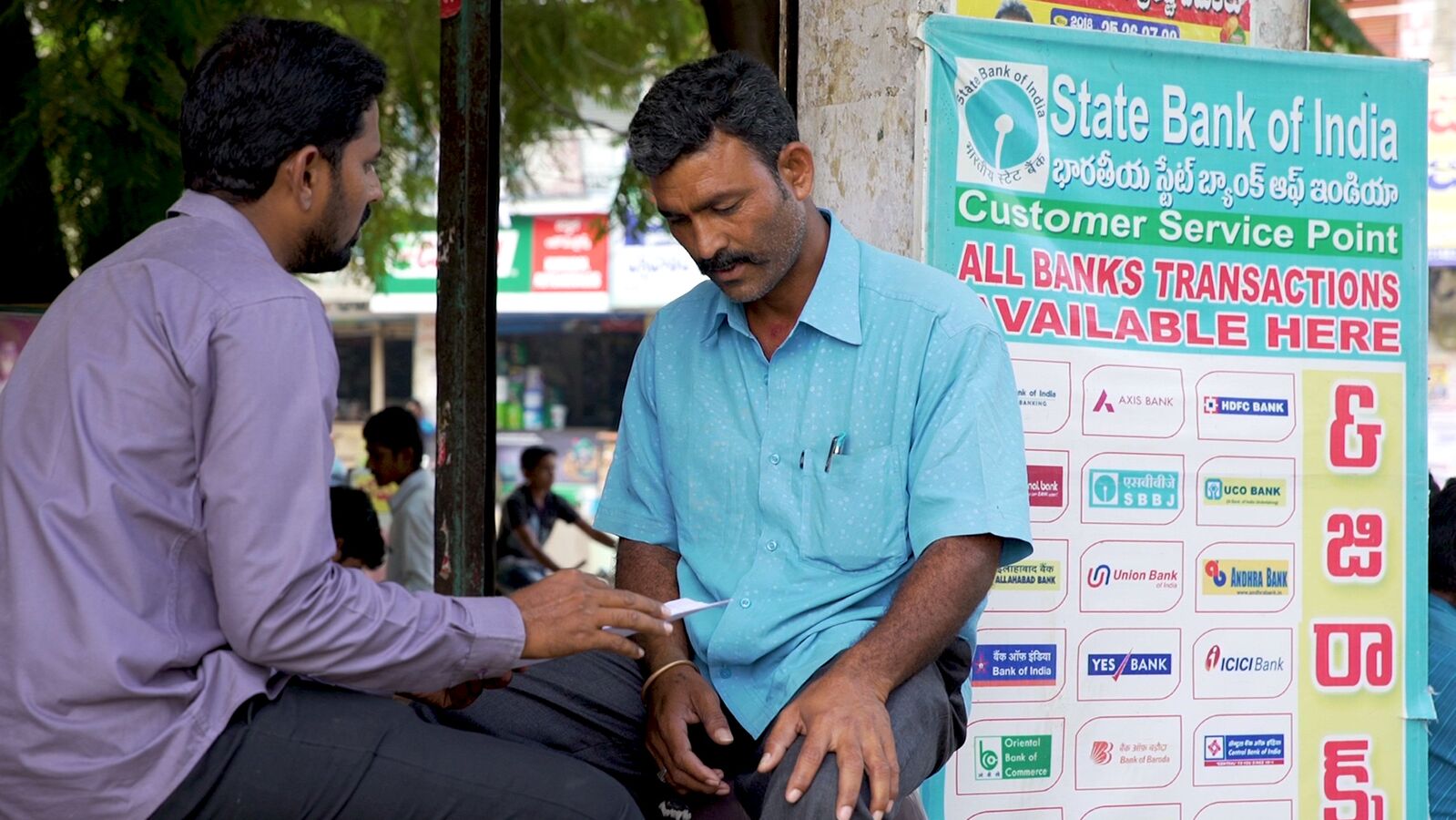
				<content:encoded><![CDATA[<p>How do Indian families living in urban poverty approach health care? To answer this question and better understand how to structure a customized emergency health loan product for India’s urban poor, the foundation recently commissioned a study of families in five Mumbai slums.</p>
<p>The <a href="http://www.msdf.org/assets/Redacted-final-Needs-Assessment-Survey-for-Micro-Health-Loan-Product-Mar-2013.pdf" target="_blank">research</a>, conducted between December 20, 2012 and February 8, 2013, surveyed members of 545 low-income households located close to hospitals.</p>
<h2>The families; the findings</h2>
<p style="text-align: center;"><a href="http://www.msdf.org/assets/Survey-demographics-2.jpg"><img class="size-full wp-image-4552 aligncenter" alt="Survey demographics 2" src="http://www.msdf.org/assets/Survey-demographics-2.jpg" width="483" height="229" /></a></p>
<h5 style="text-align: center;" align="center">Figure 1: Survey participant demographics</h5>
<p>The families surveyed all had monthly incomes ranging between INR 7,500 to 20,000 (US $139 to $370.) When the results were collated, we learned that:</p>
<ul>
<li>82 households had a major health issue in the last two years. Reported ailments included cardiac issues, broken bones, accidents, malaria, dengue fever and others.</li>
<li>The average cost to treat heart-related illnesses, which topped the list of major illnesses, was INR 82,000 (US $1,515.)</li>
<li>Around 50 percent of participating households had taken out loans at interest rates of over 60 percent per annum to meet their health financing needs.</li>
<li>Local private clinics (usually unlicensed medical practitioners) were typically the first point of contact for respondents seeking care. As such, these clinics play an important role in influencing behavior for both minor and major ailments.</li>
<li>Respondents were skeptical or wary of private hospitals, because they worried about either being overcharged or being treated poorly.</li>
<li>Participants had a positive perception of government-run hospitals, where they felt they would be well treated at an affordable cost.</li>
<li>Participants responded positively to the concept of an emergency health loan at an interest rate of roughly 20 percent per annum.</li>
<li>Private hospitals offer differential pricing based on ability to pay.</li>
</ul>
<h2>Clear needs among India&#8217;s urban poor; no clear solutions</h2>
<p>One important caveat to note is that the results of this survey were self-reported and not verified. Several major implications are nonetheless clear.</p>
<ol>
<li>There’s an enormous gap between the health costs impoverished urban families face and the income they earn.</li>
<li>There’s a huge need for a financial product that helps families deal with emergency health issues.</li>
<li>There’s a market opportunity for a health credit product that can positively impact the lives of the urban poor.</li>
<li>There are several potential barriers to success that must be overcome for any market-based solution to gain enough traction to benefit the intended recipients. These include:
<ol>
<li>Insufficient awareness and adoption among intended customers: Market-based health-loans will depend on ensuring awareness among the right set of influencers and intermediaries (e.g., community based organizations)</li>
<li>Risk of abuse by health care providers: Any emergency health loan product would need to be offered at the right kind of hospitals, since purely commercial operators might charge more if they realize that poor patients have access to financing mechanisms.</li>
</ol>
</li>
</ol>
<h2>Overcoming the adoption challenge starts with understanding the real-world behaviors of India&#8217;s urban poor</h2>
<p>How do we address the gap between need and adoption? Microinsurance, if appropriately designed, priced, and distributed, would be an ideal financial intervention, but to date, microinsurance has had limited success. (A recent review of more than 30 studies, described in an April <a href="http://www.cgap.org/blog/why-people-don%E2%80%99t-buy-microinsurance" target="_blank">blog post</a> from CGAP, offers an analysis of the reasons global customers don’t buy microinsurance. Topping the list are “trust, liquidity constraints, the quality of the client value proposition and behavioral constraints.”)</p>
<p>The trick is to look beyond traditional incentives such as low price points, and to understand and address the real health-seeking behaviors of this underserved market segment. (What the CGAP blog refers to as “the demand puzzle in … context.”)</p>
<h2>Sharing insights</h2>
<p>Given the right insights, Indian entrepreneurs and established financial service providers have an immense opportunity to tap this underserved market and design a product that would have a positive impact on the lives of the urban poor in India. We’re making the details of our study available in the hopes that it can spur needed innovation in the field. Share it far and wide. We look forward to the next generation of innovation designed to address the specific health care needs, motivations and concerns of India’s urban poor.<a href="file:///C:/Users/Ashley.Craddock/AppData/Local/Microsoft/Windows/Temporary%20Internet%20Files/Content.Outlook/GUGNPKCL/Health%20loans%2005032013%20(3).docx#_msocom_1"><br />
</a></p>
<p><i>The findings, a joint product of the foundation, Delphi Research Services Private Limited and a start-up company, can be read <a href="http://www.msdf.org/assets/Redacted-final-Needs-Assessment-Survey-for-Micro-Health-Loan-Product-Mar-2013.pdf" target="_blank">here</a>. They include more detail on the kinds of ailments, decision-making behavior of the urban poor, the role of local NGOs and hospitals as well as government run health insurance schemes in Mumbai. </i></p>
]]></content:encoded>
			<wfw:commentRss>http://www.msdf.org/blog/2013/05/microinsurance-research-indias-urban-poor/feed/</wfw:commentRss>
		<slash:comments>0</slash:comments>
		</item>
		<item>
		<title>Amanda Timm: Cristina’s walk- Built environments and childhood health</title>
		<link>http://www.msdf.org/blog/2013/05/amanda-timm-built-environment-childhood-health-childhood-obesity/?utm_source=rss&#038;utm_medium=rss&#038;utm_campaign=amanda-timm-built-environment-childhood-health-childhood-obesity</link>
		<comments>http://www.msdf.org/blog/2013/05/amanda-timm-built-environment-childhood-health-childhood-obesity/#comments</comments>
		<pubDate>Tue, 07 May 2013 11:00:12 +0000</pubDate>
		<dc:creator>Guest Blogger</dc:creator>
				<category><![CDATA[Healthy Living]]></category>
		<category><![CDATA[Obesity Awareness]]></category>
		<category><![CDATA[Childhood Health]]></category>
		<category><![CDATA[Childhood Obesity]]></category>
		<category><![CDATA[Health]]></category>
		<category><![CDATA[Obesity Prevention]]></category>

		<guid isPermaLink="false">http://www.msdf.org/?p=4501</guid>
		<description><![CDATA[Healthy people and healthy neighborhoods don’t happen accidentally. It’s time for community developers to align more strategically and more intentionally with the public health community. ]]></description>
				<content:encoded><![CDATA[<p><i>Cristina lives in an impoverished neighborhood near Houston’s downtown. Every day, Cristina’s first challenge is to get to school. The half-mile route is full of hazards. It includes a wide range of sidewalk conditions &#8211; none, broken, decent, and one with no barrier from the morning traffic zooming by. On one block the shops are open. On the next block, they’re empty. Windows are broken, people are sleeping in the doorway of one, and some guys are standing near the entry of another empty business. Cristina has to navigate all this and more before she ever makes it to her school’s front door.</i></p>
<p>Why tell this tale? To illustrate the interplay between places and people. Simple behaviors (walking to school) are fraught with danger in a poverty-stricken urban environment. Layer on issues like 1) decaying housing stock, 2) lack of access to stores that sell healthy foods, and 3) an overabundance of those that sell cheap processed snacks, and the costs for children, not least in terms of <a href="http://pweb1.rwjf.org/reports/grr/059831.htm" target="_blank">risk for chronic diseases like childhood obesity</a> and asthma, are unconscionable.</p>
<p>How do we deal with this connection between people and place?</p>
<p>What we believe at Local Initiatives Support Coalition (LISC) is that <a href="http://www.lisc.org/greaternewark/resources/institute_for_comprehensive_community_development/index.php" target="_blank">comprehensive community development</a> is part of the answer. Comprehensive community development is an approach to neighborhood revitalization that goes beyond than traditional community development concerns such as built environments. It includes investments in affordable housing, commercial property and community centers, but it also looks more expansively at ways to provide safe streets, safe outdoor places for families to engage in physical activity, and easier access to healthy foods.  In Houston and other urban centers nationwide, LISC programmatically connects local organizations and community leaders with one another. The goal is to ensure that residents in a given neighborhood have access to resources (stores, parks, community gardens) that make healthy choices easy.</p>
<h2>Ensuring people and place prosper and thrive</h2>
<p>Here’s how comprehensive community development works in practice: To help improve the health environment in specific neighborhoods, we provide grants to community-based nonprofits that care about creating a healthy community. We then encourage networking among them, so that they coordinate their efforts for maximum impact. We also make direct investments in built environment that support positive health outcomes. In Houston, for instance, LISC invested in improving a high school sports field, which neighborhood families then used in the evenings.</p>
<p>Does this approach make a difference? Emerging evidence says yes. One 2013 study comparing four Kansas City neighborhoods – two where LISC works and two comparison neighborhoods—found a positive correlation between a comprehensive community development and positive health outcomes.</p>
<p>Healthy people and healthy neighborhoods don’t happen accidentally. With so many neighborhoods struggling with poverty and costly, preventable diseases like obesity, it’s time for community developers to align more strategically and more intentionally with the public health community.  A holistic approach focused on comprehensive community development is where we will see lasting improvements for Cristina and other low-income children nationwide.</p>
<p><i>Amanda Timm is executive director of <a href="http://www.lisc.org/houston/index.php">Houston LISC</a> . Amanda orchestrated Houston LISC’s strategic shift to a comprehensive approach for community development.  The implementation of this new strategy has led to the local launch of the <a href="http://www.lisc.org/houston/programs/go-neighborhoods/index.php">Great Opportunities (GO) Neighborhoods Program</a> and the inclusion of Houston as an expansion site for the <a href="http://www.lisc.org/houston/programs/financial_opportunity_centers/index.php" target="_blank">Financial Opportunity Centers</a> by National LISC.</i></p>
<p><i> </i></p>
]]></content:encoded>
			<wfw:commentRss>http://www.msdf.org/blog/2013/05/amanda-timm-built-environment-childhood-health-childhood-obesity/feed/</wfw:commentRss>
		<slash:comments>0</slash:comments>
		</item>
		<item>
		<title>John Hoffman: Where is the weight of the nation today?</title>
		<link>http://www.msdf.org/blog/2013/05/weight-of-the-nation-today/?utm_source=rss&#038;utm_medium=rss&#038;utm_campaign=weight-of-the-nation-today</link>
		<comments>http://www.msdf.org/blog/2013/05/weight-of-the-nation-today/#comments</comments>
		<pubDate>Fri, 03 May 2013 11:00:12 +0000</pubDate>
		<dc:creator>Guest Blogger</dc:creator>
				<category><![CDATA[Healthy Living]]></category>
		<category><![CDATA[Obesity Awareness]]></category>
		<category><![CDATA[Childhood Health]]></category>
		<category><![CDATA[Childhood Obesity]]></category>
		<category><![CDATA[Health]]></category>
		<category><![CDATA[Obesity Prevention]]></category>
		<category><![CDATA[Weight of the Nation]]></category>

		<guid isPermaLink="false">http://www.msdf.org/?p=4458</guid>
		<description><![CDATA[Obesity is something we can address. If we, as a country, engineered our way into this obesity mess, we must also be able to engineer our way out of it.  ]]></description>
				<content:encoded><![CDATA[<p>When <em>The Weight of the Nation </em>premiered in May 2012, HBO and its partners did everything in their power (trust me, no expense was spared) to sound the loudest possible alarm that obesity is the single most important driver of chronic disease and disability in this country, and that it could be the reason why children born in the US today might have shorter lives than their parents.</p>
<p>On May 7th, 2013, HBO will once again call attention to the obesity crisis when it premieres the three-part series, <em>The Weight of the Nation for Kids. </em></p>
<p>Why should all families, all schools, all community leaders, all employers and all policymakers watch this series? Because it so effectively undermines our fatalism about the seemingly intractable obesity crisis.</p>
<p>Don’t get me wrong. The obesity crisis is big, and it’s frightening, and it’s something we must all pay attention to. But there’s good news here. Obesity is something we can address. If we, as a country, engineered our way into this obesity mess, we must also be able to engineer our way out of it.</p>
<h2>Kids lead the way</h2>
<p><em>The Weight of the Nation for Kids </em>makes this point by introducing viewers to a few very smart, very inspired and very tenacious people who have the will and who find a way.</p>
<p>What’s crucial to know is that none of these smarties are adults. All three films, <em>Kebreeya’s Salad Days, The Great Cafeteria Takeover</em> and <em>Quiz Ed!</em> feature youth from rural North Carolina, New Orleans and Madison, Wisconsin. The children in these films understand that when it comes obesity, the whole system is to blame. They also understand that the only way we’re going to solve obesity is if we change that system.</p>
<p>These kids show us all what we have to do. They aren’t waiting for politicians, administrators, parents, or food companies to make changes for them. They speak truth to power, and power sits up to listen.</p>
<ul>
<li>Greasy pizza, hamburgers and fries &#8211; the only daily choices they have &#8211; does not a healthy teenager make.  All Kebreeya Lewis from Goldsboro, North Carolina wants for herself and her friends is a salad bar in her high school cafeteria.  Anyone who doesn’t believe in the power of one voice needs to watch <em>Kebreeya’s Salad Days</em> to see how Kebreeya takes her fight to city hall and wins.</li>
</ul>
<ul>
<li>In <em>The Great Cafeteria Takeover</em>, we meet the Rethinkers  (an after-school group of teens from the Recovery School District of New Orleans) who want healthy, appealing food for breakfast and lunch.  To the dismay of many, they are willing to ask the big corporations who have the contract to feed the school children of New Orleans a simple question: why wouldn’t you want to nurture our growing bodies and minds? To the delight of the press and their fellow students this group of teens take their questions all the way up the corporate and administrative ladders to get what they feel every child in New Orleans deserves – healthy, tasty (and local) food.</li>
</ul>
<ul>
<li>In <em>Quiz Ed!</em> the children of Madison, Wisconsin show us that old fashioned play – whether touch football, skateboarding, ski jumping or just jumping in and out of the town pool &#8211; is not dead.  Video games and texting have not won in that town. <em>Quiz Ed!</em> proves that kids aren’t lazy, they WANT to move, they KNOW moving makes them feel better and they ALL deserve safe places to play.  Every kid and every adult who cares about kids needs to listen and learn from <em>Quiz Ed!</em></li>
</ul>
<h2>Turning the tide on obesity</h2>
<p>The weight of the nation is still too high. It’s still costing us far too much to manage. As a nation, we continue to face profound questions: Do our leaders, our communities, our families—do we, as individuals—have the will to change the whole way we live in order to secure a healthy future?  Can we turn the tide?</p>
<p>I think we can. We’ve done it before, with tobacco and seat belts. And the kids in these new films give me hope. They offer clear examples of the kind of perseverance required to win the small but real victories that will lead to the ultimate goal.</p>
<p>For the sake of our children, we must all learn from these examples, spread them across the land and dedicate ourselves to reducing the weight of the nation.</p>
<p><strong><em>The Weight of the Nation for Kids </em>premiers on HBO on May 7th at 5:30 EST.  It is also available to anyone with access to a computer at <a href="http://theweightofthenation.hbo.com/" target="_blank">http://theweightofthenation.hbo.com/</a> </strong></p>
<p><i>John Hoffman is Executive Producer of  </i>The Weight of the Nation for Kids<i> and Founder of The Public Good Projects (PGP,) a non-profit whose mission is to create a continuous and permanent supply of innovative media that improves the health of Americans young and old. Prior to forming PGP John was Vice President of HBO Documentary Films. Partners behind </i> The Weight of the Nation <i>series include HBO, The Institute of Medicine, The Centers for Disease Control, The National Institutes of Health, The Michael &amp; Susan Dell Foundation and Kaiser Permanente.</i></p>
]]></content:encoded>
			<wfw:commentRss>http://www.msdf.org/blog/2013/05/weight-of-the-nation-today/feed/</wfw:commentRss>
		<slash:comments>0</slash:comments>
		</item>
		<item>
		<title>First person: A Boston dad walks his way to health (and inspires his community to join him)</title>
		<link>http://www.msdf.org/blog/2013/05/first-person-a-boston-dad-combats-childhood-obesity-walks-for-healt/?utm_source=rss&#038;utm_medium=rss&#038;utm_campaign=first-person-a-boston-dad-combats-childhood-obesity-walks-for-healt</link>
		<comments>http://www.msdf.org/blog/2013/05/first-person-a-boston-dad-combats-childhood-obesity-walks-for-healt/#comments</comments>
		<pubDate>Thu, 02 May 2013 13:16:49 +0000</pubDate>
		<dc:creator>Guest Blogger</dc:creator>
				<category><![CDATA[Healthy Living]]></category>
		<category><![CDATA[Obesity Awareness]]></category>
		<category><![CDATA[Be Well stories]]></category>
		<category><![CDATA[Childhood Health]]></category>
		<category><![CDATA[Childhood Obesity]]></category>
		<category><![CDATA[Health]]></category>
		<category><![CDATA[Obesity Prevention]]></category>

		<guid isPermaLink="false">http://www.msdf.org/?p=4479</guid>
		<description><![CDATA[I’m a special education teacher in the Boston School District.  I use walking as a tool for myself, for my family, and for my students. ]]></description>
				<content:encoded><![CDATA[<p><i>Almost one third of US kids are overweight or obese. But in some cities and communities across the nation, rates are improving. Everyday heroes are turning the tide against childhood obesity and helping to improve the health of their families. Donnie, the Boston father of two young sons, needed to improve his own health. Changing his own routine spurred his whole family begin to incorporate healthy habits into their day-to-day lives. It also had an impact on his larger community.</i></p>
<h2>Donnie’s story</h2>
<p>I started walking when my kids were babies. I kind of fell in love with it.  Now the exercise has become part of my daily life.  I keep track of how much I walked on a pedometer. One mile here, two miles there—it all adds up.</p>
<p>I’m a special education teacher in the Boston School District.  I use walking as a tool for myself, for my family, and for my students. Walking allows my family to spend time together and explore parts of our community that we never had before. I have a new appreciation for where we live, which I think I’m passing down to our sons.  Instead of driving everywhere, we walk to get our groceries, we walk to the park, and we walk along the river that runs through town.</p>
<h2>Healthy habits inspire healthy communities</h2>
<p>I’ve seen so many benefits of incorporating exercise into my daily routine that I try to incorporate it into my classroom, so the students get moving every day. I’ve definitely seen the exercise have a positive impact on them.</p>
<p>When I started walking, I also changed my eating habits. I lost 54 pounds the first year. Being more aware of labels on foods, what’s being sold, how it’s being advertised… my hope is that maybe everyone can do that.</p>
<p>What our family has done is rubbing off on other families. I have life-long buddies who now load their kids in strollers and walk with me and my boys to the park or to our favorite coffee shop on Saturday mornings. One of my best friends even wears a pedometer now, so we compete to see who can walk the most miles in a certain period of time.</p>
<h2>Donnie’s tips</h2>
<ul>
<li>Start with short walks and build up to longer walks.</li>
<li>Involve your whole family. Take walks together. If your kids are too young to walk on their own, put them in the stroller and take them with you. They’ll see your behavior and model it when they can walk on their own.</li>
<li>Use a pedometer to track the number of steps or distance you walk every day. Try to beat your total each day.</li>
<li>Invite friends to meet you for walks.  It’s a great way to catch up and be active at the same time.</li>
<li>Incorporate walking into your routines. Walk to the store, and when you’re there, read labels, minimize sugar, and buy healthy products.</li>
</ul>
<p><em>To read more about Donnie and other families who’ve adopted healthy habits to combat childhood obesity in their own homes, visit <a href="https://webmail.interpublic.com/owa/redir.aspx?C=_ABumRkm6EqS-J0z1yLtYxAM4zyg-s9Ir4ls9a3a6VuqYQ0x1TnPYOENyy64Eftrt7HEabG-Nv0.&amp;URL=http%3a%2f%2fwww.bewellbook.org%2f" target="_blank">www.bewellbook.org</a>, and order or download your free copies of  </em>A Year of Being Well: Messages From Families on Living Healthier Lives.<em> Or you can hear more of <a href="https://www.youtube.com/watch?v=B2yNkibbl1s&amp;feature=player_embedded">Donnie’s story</a> on YouTube.</em></p>
]]></content:encoded>
			<wfw:commentRss>http://www.msdf.org/blog/2013/05/first-person-a-boston-dad-combats-childhood-obesity-walks-for-healt/feed/</wfw:commentRss>
		<slash:comments>0</slash:comments>
		</item>
		<item>
		<title>Victor Rocha: Struggles and triumphs of a first generation college student</title>
		<link>http://www.msdf.org/blog/2013/04/dell-scholars-struggles-and-triumphs-of-a-first-generation-college-student/?utm_source=rss&#038;utm_medium=rss&#038;utm_campaign=dell-scholars-struggles-and-triumphs-of-a-first-generation-college-student</link>
		<comments>http://www.msdf.org/blog/2013/04/dell-scholars-struggles-and-triumphs-of-a-first-generation-college-student/#comments</comments>
		<pubDate>Mon, 29 Apr 2013 11:00:12 +0000</pubDate>
		<dc:creator>Guest Blogger</dc:creator>
				<category><![CDATA[College Prep & Persistence]]></category>

		<guid isPermaLink="false">http://www.msdf.org/?p=4431</guid>
		<description><![CDATA[All along I wanted to make my family proud. But it can be hard when you’re surrounded with all the  pressure of succeeding and constantly being told, "You can be who you want to be." After a year, I found myself struggling.]]></description>
				<content:encoded><![CDATA[<p><i>For first generation students, the college experience is uncharted territory. Often they face critical decisions about their academic careers without the benefit of advice from family members. And as the first in their families to go to college, they also face an incredible amount of pressure to succeed. </i><i>Victor Rocha,</i><i> 24, is one such student. A Dell Scholar who will graduate from California State Polytechnic University in Pomona, CA this June, he has had a circuitous, seven-year journey through higher ed.  </i></p>
<h2>Dream school admission, then a struggle to acclimatize</h2>
<p>When I was 16 my parents moved to Phoenix, AZ but I stayed behind in California with my older sister. I got a job and had a long commute on a bus to my high school . After high school, I  went to U.C. Berkeley to study mechanical engineering.</p>
<p>All along I wanted to make my family proud. But it can be hard when you’re surrounded with all the pressure of succeeding and constantly being told, &#8220;You can be who you want to be.&#8221; After a year, I found myself struggling. I was working extremely hard but not getting the grades I was used to, and I couldn’t fit in to the competitive scene. I began to ask myself if I was ever going to graduate.</p>
<h2>Going back home, community college and, ultimately, a third school</h2>
<p>Eventually, I left Berkeley. I decided to go back home to a community college because of my low GPA and concerns about money. It was extremely hard to walk away and tell my family I had failed at Berkeley.</p>
<p>Back at home, I was juggling work and classes. My plan plan was to go back to a four year university. After a year, I  transferred to California State Polytechnic University-Pomona. I chose it because of its engineering program and its hands on faculty-to-student ratio.  It was also nearby. But I continued to question myself. I couldn’t see the light at the end of the tunnel.</p>
<p>Finally, I waved the flag and said I needed help.</p>
<h2>Support to succeed: Dell Scholars Program &amp; a trusted advisor</h2>
<p>When I told the Dell Scholars Program team about my situation their support was huge.  We went back and forth on my situation and my options, and they offered support beyond a check. I had to check in with the program after each quarter. That really helped me. It made me reflect on what I was doing. I also sat down with a professor who took the time to listen to me. He showed me the different paths I could take and he said, “If you are going to switch majors because it is easier, don’t switch. Switch if your current major really doesn’t fit.”</p>
<p>That’s when I found industrial engineering. Unlike mechanical engineering, it just clicked. My grades improved.</p>
<h2>Success on the horizon</h2>
<p>What I feel now is that the journey through college is about finding out about yourself and your capacities. How do you study? Do you take advantage of resources? Can you handle the pressure of asking a question if you don’t understand?</p>
<p>The decisions I made were hard, but now I look back and see that the difficult choices made me who I am. I am very proud of where I am, and I can finally see the light at the end of the tunnel.  My older brother started talking about my graduation the other day. To finish and have my parents be proud of me, that is HUGE! I will have so many opportunities with my industrial engineering  degree. Who knows?  I may be a chief operating officer one day.</p>
<p><em>Read <a href="http://www.msdf.org/blog/2013/04/grit-determination-potential-dell-scholars-stories/" target="_blank">more stories from Dell Scholars</a>.</em></p>
<p><em>Learn more about the <a href="http://www.msdf.org/programs/urban-education/initiatives/united-states/dell-scholars-program/" target="_blank">Dell Scholars Program</a> and about our <a href="http://www.msdf.org/programs/urban-education/initiatives/united-states/college-preparation-completion/" target="_blank">College Preparation and Completion</a> efforts.</em></p>
]]></content:encoded>
			<wfw:commentRss>http://www.msdf.org/blog/2013/04/dell-scholars-struggles-and-triumphs-of-a-first-generation-college-student/feed/</wfw:commentRss>
		<slash:comments>2</slash:comments>
		</item>
		<item>
		<title>Lori Fey: More than a score- What Dell Scholars tell us about standardized tests</title>
		<link>http://www.msdf.org/blog/2013/04/lori-fey-more-than-a-score-what-dell-scholars-tell-us-about-standardized-tests-and-their-limits/?utm_source=rss&#038;utm_medium=rss&#038;utm_campaign=lori-fey-more-than-a-score-what-dell-scholars-tell-us-about-standardized-tests-and-their-limits</link>
		<comments>http://www.msdf.org/blog/2013/04/lori-fey-more-than-a-score-what-dell-scholars-tell-us-about-standardized-tests-and-their-limits/#comments</comments>
		<pubDate>Fri, 26 Apr 2013 11:00:39 +0000</pubDate>
		<dc:creator>Guest Blogger</dc:creator>
				<category><![CDATA[College Prep & Persistence]]></category>
		<category><![CDATA[Education Reform]]></category>
		<category><![CDATA[College]]></category>
		<category><![CDATA[College Completion]]></category>
		<category><![CDATA[College Persistence]]></category>
		<category><![CDATA[College Prep]]></category>
		<category><![CDATA[Dell Scholars Program]]></category>
		<category><![CDATA[Education]]></category>
		<category><![CDATA[US Ed]]></category>

		<guid isPermaLink="false">http://www.msdf.org/?p=4405</guid>
		<description><![CDATA[Dell Scholars, on average, have an ACT score of 19 and an SAT of 1400.  (The maximum scores for these tests are 36 and 2400, respectively.) Judging from those test scores alone, you might not have much hope that these students could be successful in college. ]]></description>
				<content:encoded><![CDATA[<p>A quote from a recent interview with 2012 Teacher of the Year Rebecca Mieliwocki stuck with me.  In the article, she offers a great analogy for the role of test scores saying, “The kind of kids you want me to send out my door are way more than a test score.</p>
<p>&#8220;A test score is part of them,&#8221; <a href="http://www.ledger-enquirer.com/2013/03/26/2439079/qa-with-national-teacher-of-the.html" target="_blank">Mieliwocki continues</a>. &#8220;It&#8217;s a part that gives us information. It&#8217;s like taking your temperature if you go to the doctor&#8217;s office. It&#8217;s a vital sign, but it doesn&#8217;t tell us everything we need to know…”</p>
<h2>Test scores are one vital sign- but only one</h2>
<p>Mieliwocki’s perspective resonates with me for many reasons.  I agree that <a href="http://www.msdf.org/blog/2012/07/common-education-data-myths-data-equals-test-scores/" target="_blank">test scores are just one component</a> of the information teachers need to know, of course.</p>
<p>But there’s something about thermometer analogy that’s brilliant.  Test scores are one vital sign of academic wellness. Making decisions solely based on scores, however, risks too much, for kids and for teachers. There’s nowhere that I see this more clearly than in the Dell Scholars Program. Unique in many ways, the program focuses identifying <a href="http://www.msdf.org/blog/2012/04/80-percent-graduation-rates-three-reasons-the-dell-scholars-program-works/" target="_blank">low-income, high-potential students</a> who are  better than their numbers.</p>
<h2>Dell Scholars: So-so scores. Amazing potential.</h2>
<p>Dell Scholars, on average, have an ACT score of 19 and an SAT of 1400.  (The maximum scores for these tests are 36 and 2400, respectively.) Judging from those test scores alone, you might not have much hope that these students could be successful in college.  And yet, these students <a href="http://www.msdf.org/press-releases/dellscholars2013class/" target="_blank">graduate at rates well above the norm</a> for their socioeconomic peers.</p>
<p>The full picture of each Dell Scholar can&#8217;t be conveyed by a score alone. The full picture can only be conveyed by <a href="http://www.msdf.org/blog/2013/04/grit-determination-potential-dell-scholars-stories/" target="_blank">each scholar&#8217;s story</a> of commitment, determination, and triumph over adversity. What does this fuller, beyond-the-numbers picture look like, and what challenges have these students overcome?</p>
<ul>
<li>One successful student was the single mother of two children and had to manage life on her own as she completed her degree in education.</li>
<li>Another struggled to  balance school and complete his business degree while also helping support his newly homeless family.</li>
<li>A third struggled emotionally to overcome an abusive upbringing before finally completing her degree in accounting.</li>
</ul>
<p>These students (and their 2500+ colleagues from the Dell Scholars Program) serve as poignant reminders that there is much more to a student that a test score.</p>
<p>That reminder is especially relevant this time of year.  The 10<sup>th</sup> class of Dell Scholars has <a href="http://www.msdf.org/press-releases/dellscholars2013class/">just been announced</a>.  A total of 303 new Dell Scholars now have the backing of the Dell Scholars Program – backing that comes in the form of peer mentoring, financial management skills training, and a host of other services in addition to the $20,000 scholarship.</p>
<h2>An exclusive focus on high stakes test scores? Not so much</h2>
<p>Too often, <a href="http://larrycuban.wordpress.com/2013/04/18/donors-and-school-reform-stanley-katz/" target="_blank">critics charge</a> that education reformers are exclusively focused on high stakes test scores. I don’t think they’re looking at the evidence. For me, there’s no more poignant reminder than the Dell Scholars Program that kids are so much more than any simple temperature reading might indicate. All students deserve the opportunity to succeed &#8212; and to prove that they are more than a test score.</p>
<p>Like their fellow Scholars before them, this class of Dell Scholars has already inspired and humbled me. I’m honored to partner with a foundation that holds that view as well.</p>
<p><i>Lori Fey serves as President of the Ed-Fi Alliance. <em>Prior to leading the Alliance, Lori was  the portfolio director for policy initiatives at the Michael &amp; Susan Dell Foundation.</em></i> <i> She served on the initial Dell Scholars Program selection committee in 2003 and has served  every year since 2010.  Lori has been known to say that Dell Scholars Program is her </i><a href="http://www.msdf.org/blog/2012/04/favorite-child-dell-scholars-beacons-of-hope/"><i>favorite </i><i>initiative</i></a><i> of the Michael &amp; Susan Dell Foundation. <em>You can read more of Lori’s posts <a href="http://www.msdf.org/blog/author/lori-fey/" target="_blank">here</a>.</em>  </i></p>
]]></content:encoded>
			<wfw:commentRss>http://www.msdf.org/blog/2013/04/lori-fey-more-than-a-score-what-dell-scholars-tell-us-about-standardized-tests-and-their-limits/feed/</wfw:commentRss>
		<slash:comments>0</slash:comments>
		</item>
		<item>
		<title>Dell Young Leaders: Backstories and dreams for the future</title>
		<link>http://www.msdf.org/blog/2013/04/dell-young-leaders-backstories-and-dreams-for-the-future/?utm_source=rss&#038;utm_medium=rss&#038;utm_campaign=dell-young-leaders-backstories-and-dreams-for-the-future</link>
		<comments>http://www.msdf.org/blog/2013/04/dell-young-leaders-backstories-and-dreams-for-the-future/#comments</comments>
		<pubDate>Wed, 24 Apr 2013 06:00:28 +0000</pubDate>
		<dc:creator>Thashlin Govender</dc:creator>
				<category><![CDATA[Education Reform]]></category>
		<category><![CDATA[Dell Young Leaders]]></category>
		<category><![CDATA[South Africa]]></category>
		<category><![CDATA[South Africa Education]]></category>
		<category><![CDATA[South African Education]]></category>

		<guid isPermaLink="false">http://www.msdf.org/?p=4390</guid>
		<description><![CDATA["I have worked hard to not just become another stereotypical 'orphaned child.' I decided a long time ago that I  did not want to  to become a victim of my circumstances, but rather take ownership of my own life."]]></description>
				<content:encoded><![CDATA[<p><i>The Dell Young Leaders program seeks to ensure graduation and employment for disadvantaged South African university students who show exceptional potential to become leaders in their professional lives and their communities. </i></p>
<p><i>On Saturday, April  20, we announced a new class of 50 scholars at the University of Cape Town. Now in their first year at <i>one of South Africa’s top-tier universities</i>, these students have already overcome obstacles that are both phenomenal and common. By sharing, anonymously, the real details and real voices of some of our Dell Young Leaders, we hope to stimulate conversations among  universities and other scholarship providers about <a href="http://www.msdf.org/blog/2013/04/south-african-education-universities-must-better-support-students/" target="_blank">what supports are most vital to this population</a>, and about what sorts of obstacles many disadvantaged students face. </i><i>We thank our Dell Young Leaders for so generously sharing their stories.</i></p>
<h2>&#8216;Work as if there&#8217;s no tomorrow&#8217; *</h2>
<p>I was born in Mthatha Eastern Cape, in a rural area. At that time, children were left with their grandparents because their parents had to go and find jobs in the big cities. That happened to me. I was left with my great grandmother. When I was five years old, she died. After her death I had to be taken to the city, to a township called Gugulethu. It was my first time to live with my parents.</p>
<p>Growing up in Gugulethu, I started noticing that there are no positive role models, only those who made success out of crime. Not many people make it out of <a href="http://mg.co.za/article/2010-11-16-over-700-murders-in-gugulethu-since-2005" target="_blank">Gugulethu</a>. Many peers of mine decided to give up along the way. I could&#8217;ve been part of that. I could&#8217;ve been one of the young people lying six feet underground. But I&#8217;m not.</p>
<p>It seemed so impossible for me to come from a black township school and be enrolled at the best university in the continent. I’ve accomplished my goal of getting to the University of Cape Town. My next goal is to be on the Dean&#8217;s merit list. Now I attend every single lecture. I never miss a single tutorial. I always go out and seek help from other students. I put in extra time and effort in my studies, and I always make sure that I never submit anything late.</p>
<p>After completing my degree I want to work in a township like Gugulethu. I want to be a positive role model.  I believe that there wouldn&#8217;t be so many young people practicing crime if they had positive role models. I will always work towards changing other people&#8217;s lives and influencing them in a positive way.</p>
<h2>&#8216;Always improve your reality. Never lower your expectations.&#8217;</h2>
<p>I was born in 1994 in rural Eastern Cape. A few months after I was born, my father passed away and my mother, my six siblings and I had to move. We eventually settled in <a href="http://www.thoughtleader.co.za/sarahbritten/2010/03/23/never-run-out-of-petrol-in-libode/" target="_blank">Libode</a>, a township in Eastern Cape. My mother later became ill and passed away. After the funeral, I moved to Johannesburg and my sister (then 24) who became my legal guardian.</p>
<p>I have worked hard to not just become another stereotypical &#8216;<a href="http://www.msdf.org/programs/childhood-health/initiatives/south-africa/orphaned-and-vulnerable-children/" target="_blank">orphaned child</a>.&#8217; I decided a long time ago that I  did not want to become a victim of my circumstance, but rather take ownership of my own life and become a better person from it. When I realized how my sister had to become a mother long before she was ready, I knew that I had to work very hard to ensure that all of her work and sacrifices would not be in vain.</p>
<p>After I graduate, I am planning on joining a non-governmental organisation as a doctor to travel to remote regions in Africa and the rest of the world. After about five years of travelling and volunteering, I would like to return to South Africa to specialize in oncology, and eventually open my own practice and create employment opportunities in the process.</p>
<h2>&#8216;The future is here&#8217;</h2>
<p>I believe that the future of the country lies not only in my generation but in my hands as well.</p>
<p>I grew up in in <a href="http://www.msdf.org/blog/2012/06/south-african-education-slim-odds-of-success-unacceptable/" target="_blank">Khayelitsha</a> in an informal settlement. The area I lived in was very violent and crime-infested . I grew up with my mum and younger sister, with my mum acting as the sole bread winner for the two of us.</p>
<p>I had to grow up facing the harsh realities that come with living in a two-roomed shack. Until just recently there was no proper sanitation in the area that I lived in. We survived by using the bucket system. Finding a quiet space to concentrate on my work was also a problem,  because the nearest library is almost 2.5 KM away.</p>
<p>Even though I am not from a wealthy background, I have worked hard and focused on my studies so that I can take control of my own destiny.  I know the struggles of my peers, and I believe I have great ability and the potential to lead.</p>
<p>I’m studying for a law degree. I would like to work closely with poor people who cannot afford legal advice. In 10 years, I would like to work as a human rights lawyer for the United Nations to ensure the basic rights our forefathers fought bravely for.</p>
<p><em>* As part of the application to become a Dell Young Leader, each student was asked, &#8220;If you were a brand, what would your slogan be?&#8221; These headlines are the slogans that each featured applicant crafted.</em></p>
]]></content:encoded>
			<wfw:commentRss>http://www.msdf.org/blog/2013/04/dell-young-leaders-backstories-and-dreams-for-the-future/feed/</wfw:commentRss>
		<slash:comments>0</slash:comments>
		</item>
	</channel>
</rss>

<!-- Performance optimized by W3 Total Cache. Learn more: http://www.w3-edge.com/wordpress-plugins/

Page Caching using memcached (Session started)
Database Caching 1/17 queries in 0.010 seconds using memcached
Object Caching 1152/1204 objects using memcached

 Served from: www.msdf.org @ 2013-05-23 23:27:29 by W3 Total Cache -->