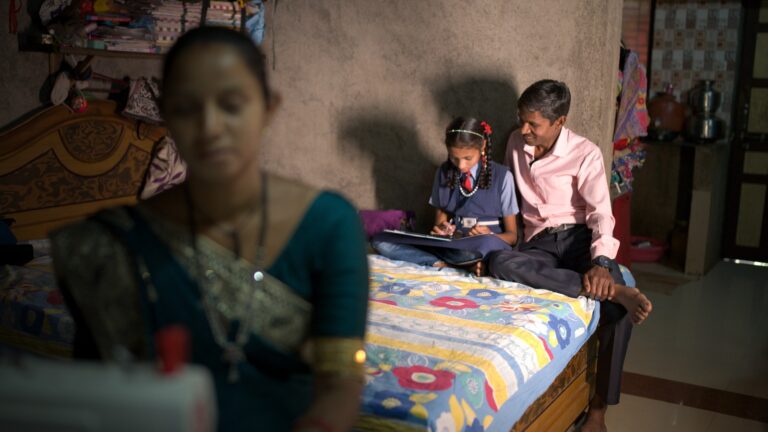
Before the Mahila Housing SEWA Trust’s pilot program to increase access to water and sanitation in urban slums, over 60 to 70 percent of the households in the affected neighborhoods lacked access to water connections.

Mahila Housing SEWA Trust

Grantee:

Mahila Housing SEWA Trust

Program:

Family Economic Stability

Grants:

More than $1 million over 42 months

Activities:

Microfinance, introduction of water and sanitation at the individual household level in India’s urban slums

Impact:

Nearly 25,000 households to date

Provision of Water and Sanitation Services for the Urban Poor

Pre-Program Environment

Before the Mahila Housing SEWA Trust’s pilot program to increase access to water and sanitation in urban slums, over 60 to 70 percent of the households in the affected neighborhoods lacked access to water connections and spent an average of two hours per day collecting water from a water tanker, public tap or polluted streams often located miles from their homes. Women were forced to defecate in the open due to limited access to individual toilets (available to only 20-30 percent of the households) and non-functionality of over 70 percent of the community toilets (typically there are only two to three community toilets serving a population of several thousand people). Furthermore, over 30 percent of the families reported quarrels with other slum residents due to issues related to water, while a lack of privacy prevented many women from defecating during the day, subjecting them to serious health problems and dangerous situations at night.

Program Accomplishments

Mahila Housing SEWA Trust (MHT), a technical grassroots housing non-governmental operation (NGO), combines expertise in community mobilization, construction and building through government / private sector partnerships. Over the last four years, the trust has implemented a pilot program on water and sanitation in four cities. With the support of the Michael & Susan Dell Foundation, MHT has provided nearly 25,000 families across 70 urban slums with access to water, sewage and toilets. By creating awareness about issues of health and hygiene, MHT has also mobilized over $700,000 from the government and nearly $500,000 from the community (primarily through access to microcredit) towards infrastructure costs.

Impact

The program has been successful not only in enhancing health outcomes, but also in positively affecting several other quality of life indicators, including convenience, productivity, safety and dignity.

Prior to the implementation of the water sanitation program, the majority of residents in these neighborhoods suffered a multitude of problems stemming from the lack of basic services at the individual household level. Post implementation, a random sample assessment study conducted by an independent research team revealed that over 60 percent of the families had access to properly functioning water, sewage and toilet connections, benefitting them in numerous ways including time savings, the ability to go to work on time, safety, convenience (especially for women) and reduction in disputes with neighbors over water-related issues. Neighborhood residents also reported increased levels of awareness about hygienic practices, technical aspects of construction, and the procedure for lodging complaints with the relevant government authorities if the basic services infrastructure does not function properly. Data on health has indicated that following improved access to basic services, the incidence of water-related diseases including typhoid, jaundice, stomach problems, diarrhea and cholera, was reduced by more than 30 percent in the target communities.

Future Outlook

The pilot program implemented across four cities has provided a wealth of lessons including the significance of active government participation and of instilling a feeling community ownership through microcredit investments. The objective of the program going forward will be to extend coverage of water and sanitation services in the slums that are currently served, and to scale up to cover additional slums. The long-term goal is to replicate the program in at least one to two new cities.

Visit grantee website