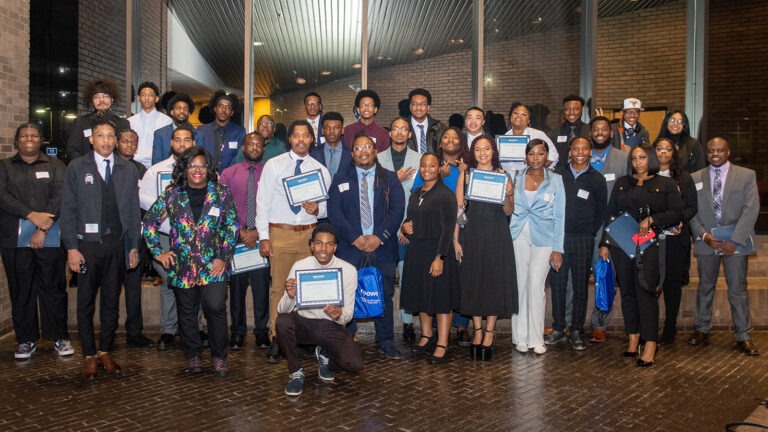
We announced the 2012 class of Dell Scholars on April 10. Within two weeks, we had identified 20 scholars who, if they went with their first choices of college, would collectively have finished freshman year with over $400,000 in student loan debt.
Extended that tally out over five years (the average time it takes Dell Scholars to graduate) and, on graduation day 2017, families wouldn’t just be watching these 20 graduates walk across stage to collect their diplomas. They’d also be staring down approximately $2M in student loan debt.
Even worse, a high percentage of those loans would likely be in the form of Parent Plus and private loans, which carry higher interest rates than most government loans.
The good news, though, is that these 20 Dell Scholars have choices. They each originally indicated plans to attend out-of-state public universities. As out-of-state students, each of these scholars potentially faces tuition costs two to three times higher than their in-state counterparts. Fortunately, all 20 were accepted to their second and third choice schools. Aid offers from these in-state schools were on the whole very favorable, offering a much higher ratio of grant aid and leaving the scholars with more manageable loan burdens.
The college funding process: ‘A mystery wrapped in a riddle’
I wanted to call these 20 scholars out, because their situations make an important point: Namely that — even at a time when headlines consistently blare about out-of-control increases in college tuition, the diminishing availability of grant aid, and the increasing costs of government loans — students and parents can still make meaningful choices that leave them much better positioned for success, both at college and after graduation.
But it’s not easy for these families to get the information they need.
As Claudio Sanchez put it in a recent NPR piece on “Negotiating the College Funding Labyrinth,” “Roughly 7 out of 10 students borrow money to pay for college, and for many, the process might as well be a mystery wrapped in a riddle… institutions can choose to explain or not explain their real price versus their sticker price, or disclose all the combinations of government and institutional loans, scholarships and grants that students can receive to pay for it.”
That mystery is, from my perspective, unacceptable. Most of these kids have worked incredibly hard. They think college is the start of something great… not the steady tick of a mounting bill that will weigh them down for decades. They deserve better information and better guidance than they’re getting. For college to remain an option for most Americans — in particular, for it to remain an option for low-income students — those of us interested in promoting college completion and graduation must embrace the role of financial guidance counselor. Our job is to empower students (generally 17 and 18-year-olds) and their families with facts and pragmatism to help them stay the course to the success they’ve already fought so hard to achieve. We have an obligation to help students understand both that pursuing their dreams at any cost may not be the right decision — and also give them the tools and resources they need to be informed consumers.
Long term solutions; short term imperatives
That’s why, in the two weeks after we announced the latest Dell Scholars class, we worked with each of the 20 scholars we identified as making risky choices to review financial aid offers; we helped each one calculate the financial reality of attending their dream school. These conversations, often first calls with new scholars who think the award of $20,000 has just put their dream schools within reach, aren’t easy. But my goal is to help students balance the excitement of pursuing their dreams with making informed decisions. Understanding the need to choose a college based not just on cultural and academic fit but also on cost is just the first of many steps along that journey.
Longer term, the viability of higher education for the majority of Americans will likely depend on implementation of polices that address the high costs of loans and tuition, and that begin to address the realities faced by low income students who are often part time family people, part time students, and part time earners. Over time (maybe sooner rather than later), we’ll also see innovations in delivery that make quality higher education more accessible to students who fall outside today’s full-time, campus-dwelling norm. But in the meantime, all of us working in the college access and college completion space must keep an eye of the college financing landscape and maintain a keen understanding of the complex issues driving college costs. Each of us must take action today to help our students and their families understand their options and make informed decisions.
For me, that means staring five years into the future, seeing the $2M bill that could rack up for just 20 of my scholars, and saying, “No. Not if I can help it.”