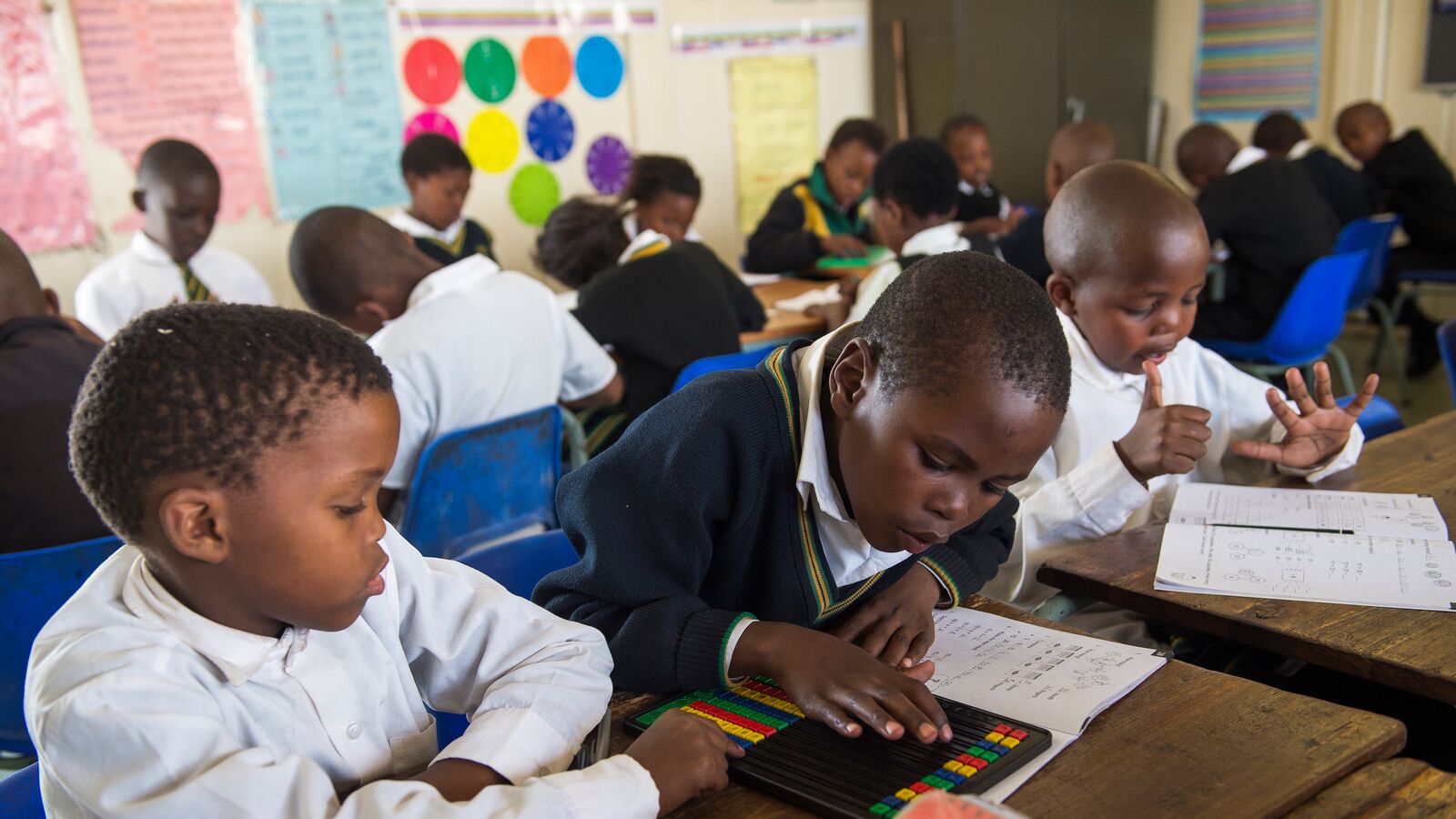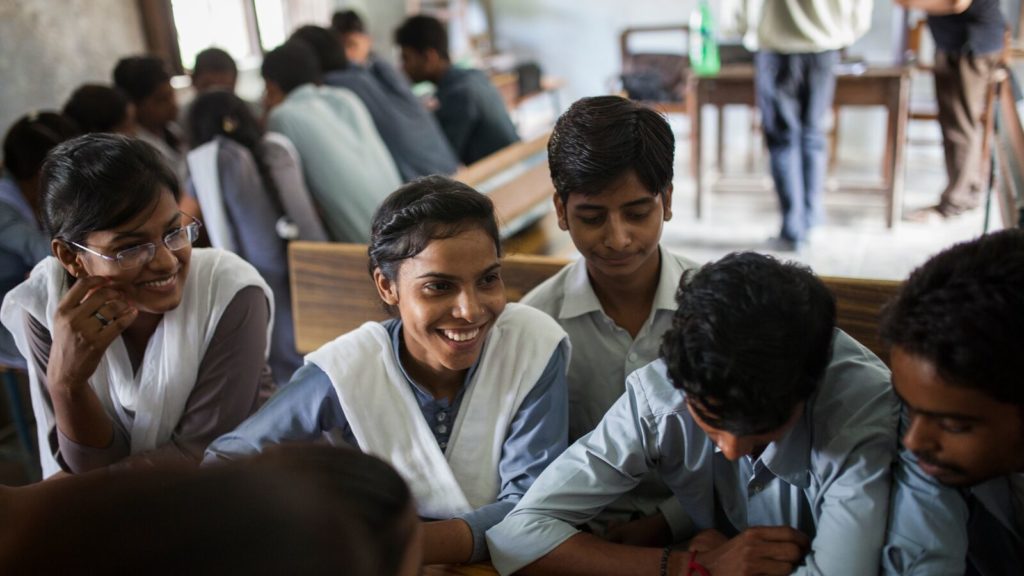
We take very seriously the idea that our role as a foundation is to catalyze programs that extend, in terms of both scale and longevity, beyond our reach. In honing in on our current health strategy in India — catalyzing Government-sponsored, school-based health initiatives designed to help ensure that urban children living in poverty get access to basic nutritional supports — we researched a series of questions. Answering each allowed us to identify a target health issue, effective and affordable interventions, and a workable strategy for achieving both scale and sustainability:
1) Which health issues are fundamental to the well-being of a large number of children in our target segment? An estimated 220,000 HIV/AIDS-infected children live in India. By comparison, nearly 60 million Indian children are malnourished. These children are susceptible to developing severe physical and cognitive defects over time. Compared to adequately nourished children, they are also much more vulnerable to a host of infections like tuberculosis, pneumonia, measles and malaria, and once they’re infected, their chances of recovering fully are significantly lower. In fact, 50 percent of all childhood deaths in developing countries like India can be directly attributed to poor nutrition.
Given the numbers of kids affected, and the severity of impact on each child, malnutrition emerged early on as a leading candidate for our efforts.
2) Do proven, well-accepted, cost-effective interventions exist? Some health interventions require advanced technology, drugs or vaccines. Others demand that participants stick to repeat rounds of vaccination or regular intake of precise dosages. Addressing malnutrition is simple by comparison:
A. De-worming tablets can be administered in Government schools where children are present in large numbers.
B. The mid-day meals contractually provided to Government school children by NGOs can easily be fortified with critical nutrients such as iron, folic acid and vitamin B12.
C. Dispensing units for clean drinking water can be set up in Government schools and serviced on a daily basis by a private operator who assumes complete ownership of the operation and maintenance.
3) Do proven, well-accepted, cost-effective delivery models already exist? Relying on specialist doctors or one-off efforts that require the creation of dedicated teams to get the job done is prohibitively expensive. But evidence gathered in rigorous evaluations from around the world shows that many of the most effective nutritional interventions can easily be delivered by nonspecialists. For instance, teachers can distribute fortified mid-day meals and de-worming tablets as well as anyone.
4) Are there other sources of funding can we leverage to ensure that our contributions have an exponential effect? State Governments in India already allocate substantial amounts of money to school-based health programs; Delhi alone has an annual budget of US$20 million for school health. But most state governments haven’t found effective ways to spend the sums they have at their disposal. That leaves a big opportunity for us to direct our resources at unlocking existing budget allocations.
5) What priorities exist at the national level? Malnutrition has long been recognized as a public health issue in India. Today, the enormity of the problem (especially for disadvantaged segments like the urban poor) and the need for urgent action is receiving greater acknowledgement from all stakeholders now than ever before. In fact, while announcing the federal budget for 2012, the Government identified malnutrition as one of its top five priorities.
6) Can we exit programs with confidence that they will remain sustainable after we’ve stepped away? Government-sponsored, school-health programs have an in-built exit strategy – the big hurdle is typically initial implementation; once a given solution has been effectively applied at scale in a few districts over a period of three to four years, we have a reasonable expectation that it will continue without our support.
Simple, cheap and effective interventions to fight malnutrition are available, and schools offer a ready-made distribution point. Our job in the coming years is to bring the right government stakeholders and the right program-implementation partners to the table to help ensure that the existing solutions are effectively implemented using money that’s already there. We’ve seen both Bihar and Delhi make significant strides already, and we’re optimistic that, with those models in mind, other states will take up the challenge and build out meaningful school-based health programs across India.