shoprite2a1

Can grocers change the world? Meet Jeff Brown

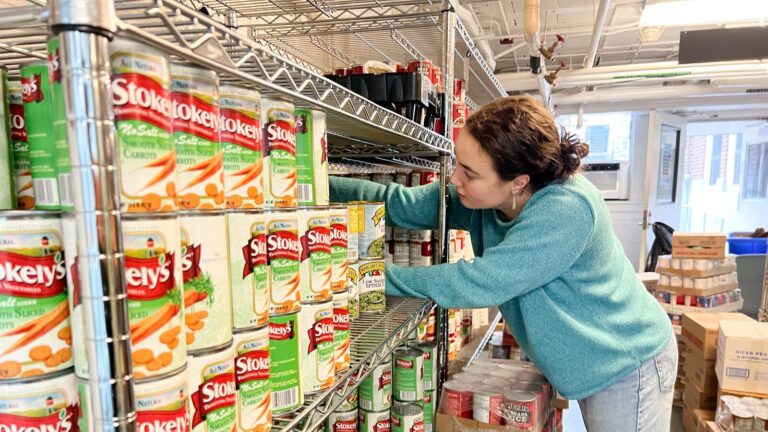
What if grocery stores were more than a food sources? What if they were instead community hubs – places where people shopped, banked, got clinical care and more? Sure that’s a big idea, and one that, at first blush, sounds like it’s asking grocers to be community saviors, not just grocers. But at a recent Supermarket Summit in Houston, Jeff Brown, an experienced and very successful grocer from Philadelphia, came to share both his vision and the story of his 10 stores: 5 thriving suburban supermarkets, and 5 thriving urban supermarkets located in areas of Philadelphia that had previously been food deserts. At the conference, Brown explained both why moving into these neighborhoods and why expansively reframing the notion of a grocery store made good economic sense. And he challenged his fellow grocers to think bigger.

The summit, which brought together a number of major Houston grocers, city staff, politicians, business leaders and other stakeholders, was an exploratory step in transporting a nationally effective food-access model to Houston. Attendees came to 1) examine the possibility of opening grocery stores in Houston food deserts, 2) discuss improvements in the inventory at the few existing stores in these neighborhoods, 3) contextualize and discuss the twin issues of food access equity and childhood obesity prevention. But as summit participants delved into the issues, the conversation expanded. A new concept of what a grocery store is began to take hold.

The baseline idea that everyone started with was that grocery stores are more than food sources. They create jobs, keep money hyper-local and even affect health outcomes. The more revolutionary concept was one of grocery stores as critical hubs of community vitality and function.

After Hurricane Katrina, former residents of ravaged neighborhoods were asked what would make them come back to live in communities they had been forced to abandon. A frequent answer? Grocery stores.

Guns for Groceries

In Philadelphia, Brown, a fourth generation grocer, has an innovative vision of what it means to run a business as a center of community vitality, especially in an inner city environment. At his urban stores, he offers training programs for neighborhood employees that address challenges like ex-offender reentry, as well as the lack of education and the lack of familiarity with standard business place interactions common in neighborhoods with high dropout rates and few small businesses. He has innovated food products, bringing in beloved foods for the diverse and sometimes immigrant groups living in the communities near his stores. He has even developed programs to exchange guns for supermarket gift cards, making the community safer and increasing sales. He often can’t get through a visit to one of his urban stores without hugs of appreciation from shoppers. But he is also doing very well for himself.

And his message to grocers at the summit was that his model is both smart and replicable: Grocers do not need to be altruists, just good business people who understand the needs of their communities. After initial support from a program the like the Food Trust’s Fresh Food Financing Initiative, now replicated in multiple nationwide sites, groceries are usually profitable. In other words, urban grocery stores that creatively address community needs are generally sustained by market economics.

Brown keeps thinking bigger and bigger. He has started a nonprofit organization to support other grocers across the country to do what he’s done. And he believes that it may be a smart move to outfit a grocery store with a clinical care facility complete with electronic medical records, instant connection to an in-store pharmacy, and staff who can help link patients to benefits like Medicaid for which they may be eligible. Maybe bringing a bank into the store would help both the community and his bottom line, since shoppers who used the services would have more money to spend on food rather than on exorbitant fees paid to the predatory check cashing stations often found in underserved neighborhoods.

Nutritionists on staff to help families shop for healthier foods and read labels… Cooking demonstrations that help families learn to cook quickly and inexpensively … Point of sale information that could turn a poor purchasing decision into a better one … Are you thinking bigger yet? The attendees of that Houston Summit, including me, are.

The foundation’s work focuses on children living in urban poverty. And so we naturally view schools as a major focal point for that work. But what if we expanded our vision? What if we added groceries stores to the equation? After all, families have to have food. They visit grocery stores often; and when they do, they are often together. And we know that proximity to decent stores correlates with improved nutritional behavior, lower prevalence of obesity-related chronic diseases, and even improved BMI.

We’re still trying to determine what this thinking means for our work and the work of our grantees. But thanks to a Philadelphia grocer, our eyes have opened a little wider: We see the potential of a neighborhood supermarket in a whole new way.

Leave a Reply